
Like Cotyledons Buckled with Loam The painting of Thomas Nozkowski with Louis Block, Joseph Brock, and Jodie Manasevit, cinematic contribution by Casimir Nozkowski, built and curated by David Dixon
Closing Reception: Saturday, January 31, 3-5 pm
Show runs through January 31, 2026 Hours: Thurs-Sun, 12-6 pm
An oblong puddle inset in the coarse asphalt, like a fancy footprint filled to the brim with quicksilver; like a spatulate hole through which you can see the nether sky Surrounded, I note, by a diffuse tentacled black dampness where some dull dun dead leaves have stuck Drowned, I should say, before the puddle had shrunk to its present size
-Vladimir Nabokov, Bend Sinister, 1947
I love being part of a community in time, you know? Before I decided to become an artist, I really thought about becoming a historian. I thought that would be a really interesting thing to do. One of the reasons I love painting, this singular thing, is the communal part of it, all sorts of people in different times and places, all trying to catch and hold some part of the visual continuum, all of them doing the same thing, no matter the context.
-Thomas Nozkowski in conversation with John Yau for The Brooklyn Rail, 2010
This exhibition began with a question asked to painter participant Jodie Manasevit during her exhibition Jodie Manasevit: Cathected at Ghostmachine this past November. The question was, “If you could show with any artist, living or dead, who would it be?” The answer: Thomas Nozkowski. This was something of a set up because I knew after having had many studio-visit conversations with Manasevit that this would be her answer. Additionally, I had just recently visited the studios of painter participants Louis Block and Joseph Brock, both of whom also referenced Nozkowski as a primary influence. Personally, I knew little about Nozkowski’s work, and quickly found and read this same Louis Block’s review of Nozkowski’s first posthumous exhibition at Pace in 2024 published in The Brooklyn Rail. A line from this exceptionally evocative review provided our exhibition’s title: Like Cotyledons Buckled with Loam. In proper Nabokovian, synesthetic fashion, these words in Block’s review “jumped off the page” at me, an effect I cannot recall ever having experienced before. Perhaps it was because I did not know any of the words written—and in English!—yet there they were, already poetically profound: “buckled” I had never seen used like that, and put in between two mysterious words, “cotyledon” and “loam.”
As I continued my investigations, I found that, indeed, Vladimir Nabokov was very important to Thomas Nozkowski, especially the first paragraph of Bend Sinister which is quoted above. As I read the novel I began to understand why; the entire narrative is spun out of the narrator’s reflections on a visual response to this seemingly innocuous “spatulate puddle.” Not irrelevantly, the tale spun is of a philosopher coming to terms with the death of his wife while his country devolves into fascism. Nabokov’s generative imagination (he was newly in exile) in relation to this puddle is a study in art as a bulwark against despair, which functions expansively in contradistinction to fascism’s fallacious reductions.
Included in this exhibition of mostly painting, we also centrally project Casimir Nozkowski’s video Thomas Nozkowski on a Hike from 2016. This video captures a conversation the filmmaker had with his painter father about seeing. I first saw this video in a studio visit with painter participant Joseph Brock who showed it to me when discussing Nozkowski’s influence. The video, oddly, made me laugh; there is a visual delight to see like this, to be taught to see like Nozkowski, to see like a Nozkowski painting. It led me to believe that everyone should paint like Nozkowski, or that this is what we all do when we paint, or even just think; essentially, we abstract things from reality. Perhaps the mark of a great artist is that their method seems, in its moment, universally applicable and self-evident. In any event, in this video, to witness Nozkowski spin a visual tale from some debris and lichen found on a rock is to know the joy of imaginative pluralism’s endless making. We should say not Art for Art’s Sake, but Life for Art’s Sake. This is the creed I now retroactively recite when presented with a Nozkowski painting.
And here we have the paintings, not only of Nozkowski, but of several generations of descendants, each of whom has their own very specific language, but all of whom have gathered some seed from Nozkowski. This installation of artwork attempts to celebrate these lived connections through art and our community of makers. With this exhibition, from a certain point of view, the whole of Art Cake (consistent with its mission) becomes a kind of cell in the act of mitosis: appropriating, extending, growing, harvesting, cathecting. Block’s article relates how Nozkowski abstracts from specific events or things even though he does not recognizably name them visually or through titling. However, the painting may, or even should, evoke the thing abstracted. Hence, in the Nozkowski equation of meaning, when looking at his abstract paintings, the viewer is permitted to reflect and free associate, to find the story in the puddle, so to speak. Yet, inevitably the defined words or concepts we use to name the thing we think we see have to be stretched ineffably to match the painting's experience, which gives birth to something poetically new whether it be in writing or in another painting or even just looking and reflecting "like cotyledons buckled with loam," as Block writes. Or as Nabokov writes in Bend Sinister, presumably intentionally and wittily misattributing the Bible’s Proverbs 25:2 to Shakespeare—less importantly by Shakespeare than about the convolutions of Shakespearian scholarship—while paraphrasing: “The glory of God is to hide a thing and the glory of man is to find it.”
David Dixon artist-curator
Click here to read review in the Brooklyn Rail by Jason Rosenfeld
Click here to read review in Art Spiel by Taylor Bielecki
Click here to read recent related Brooklyn Rail Article by Louis Block
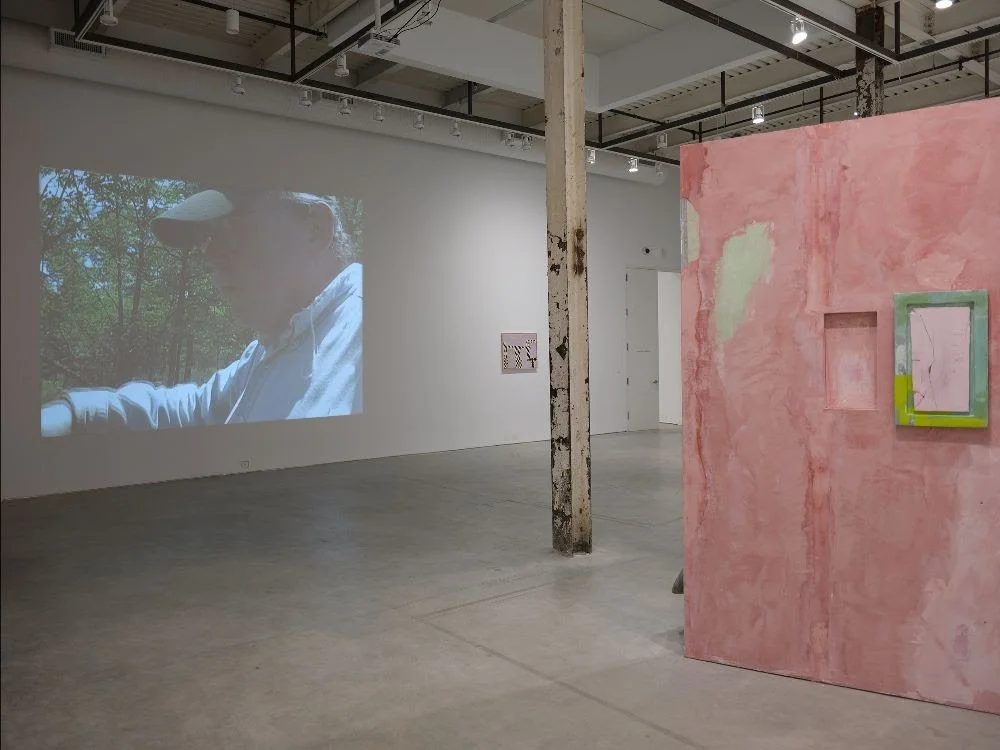
Installation View of Like Cotyledons Buckled with Loam
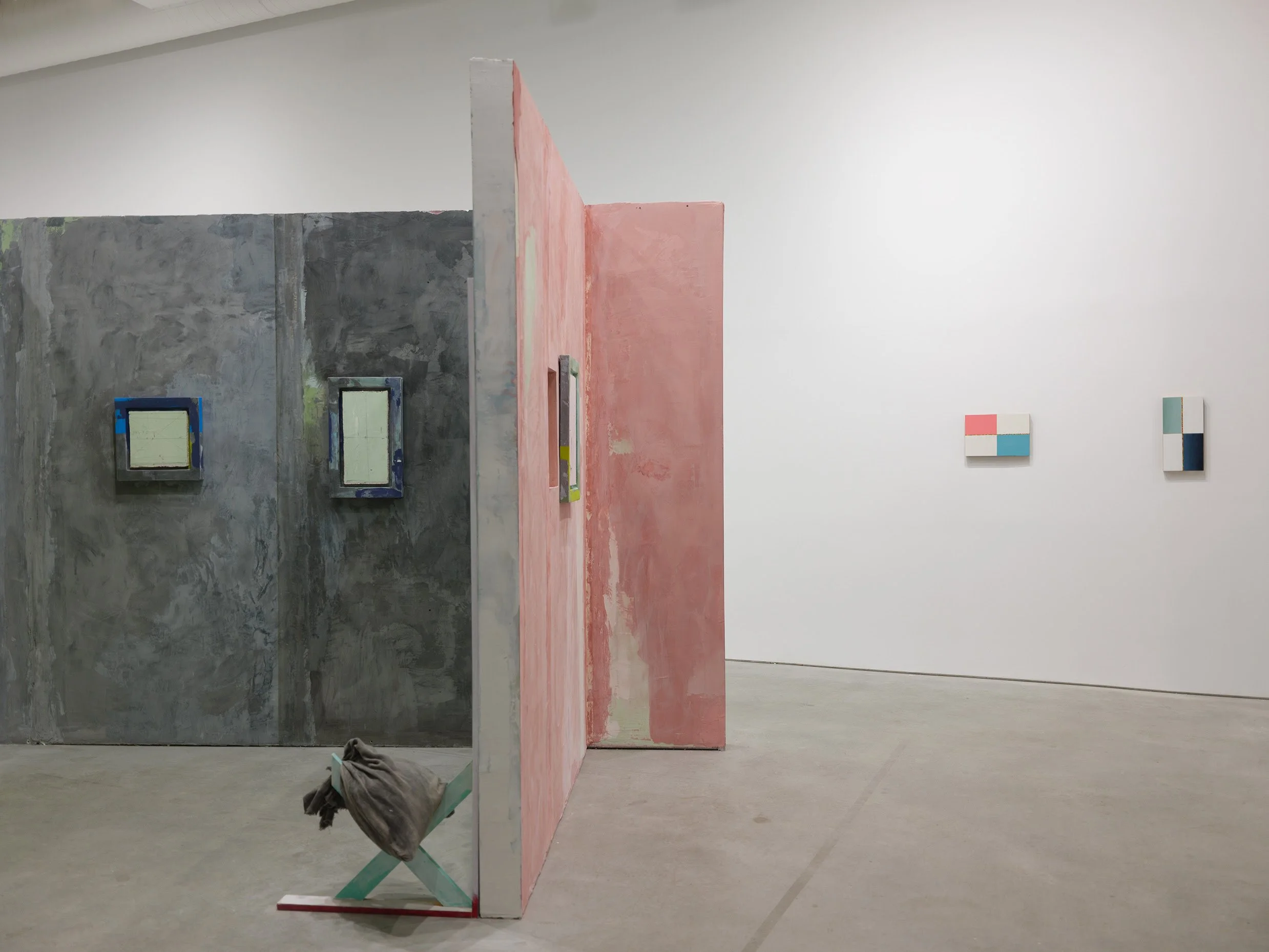
Installation View of Like Cotyledons Buckled with Loam
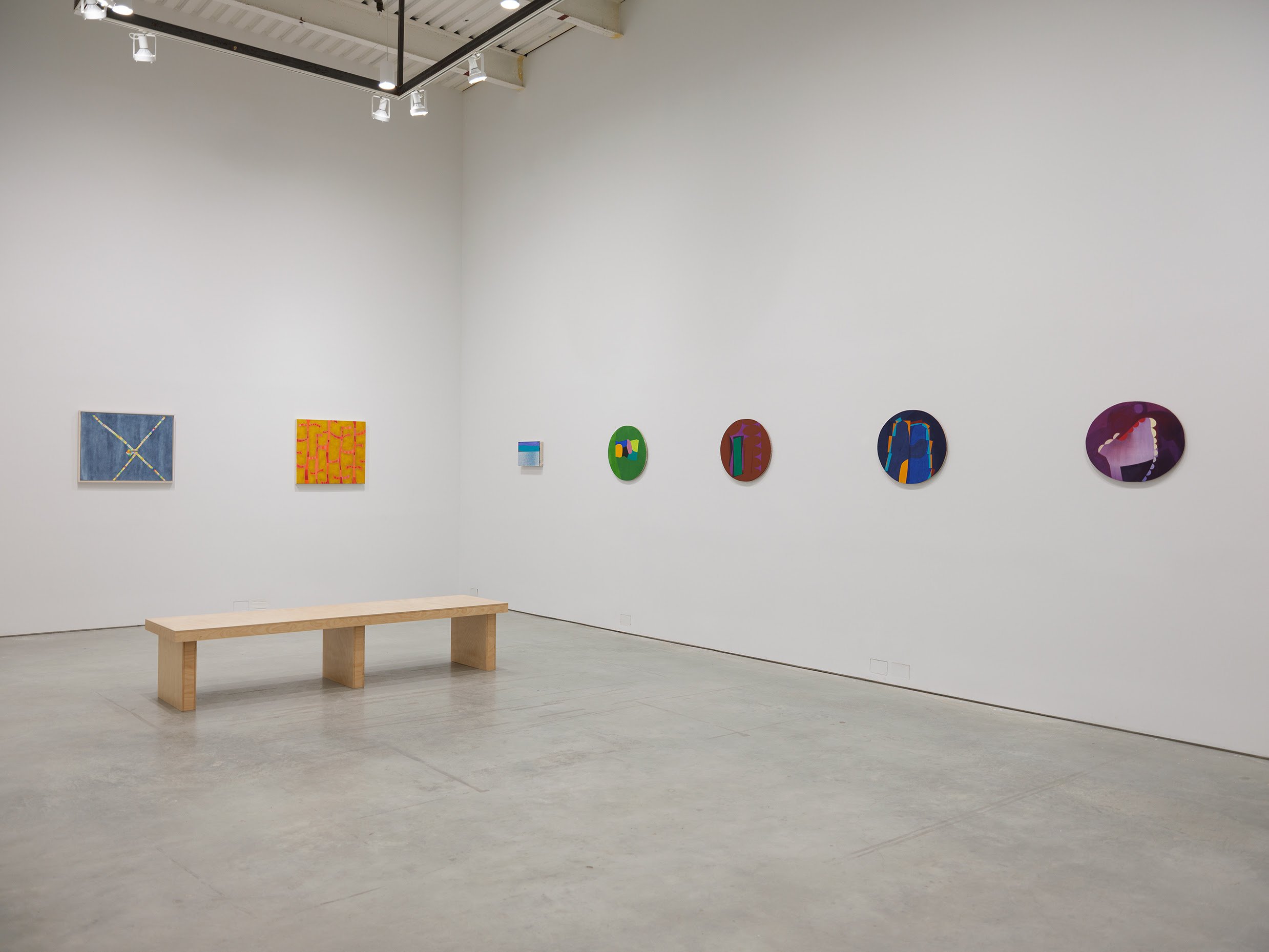
Installation View of Like Cotyledons Buckled with Loam
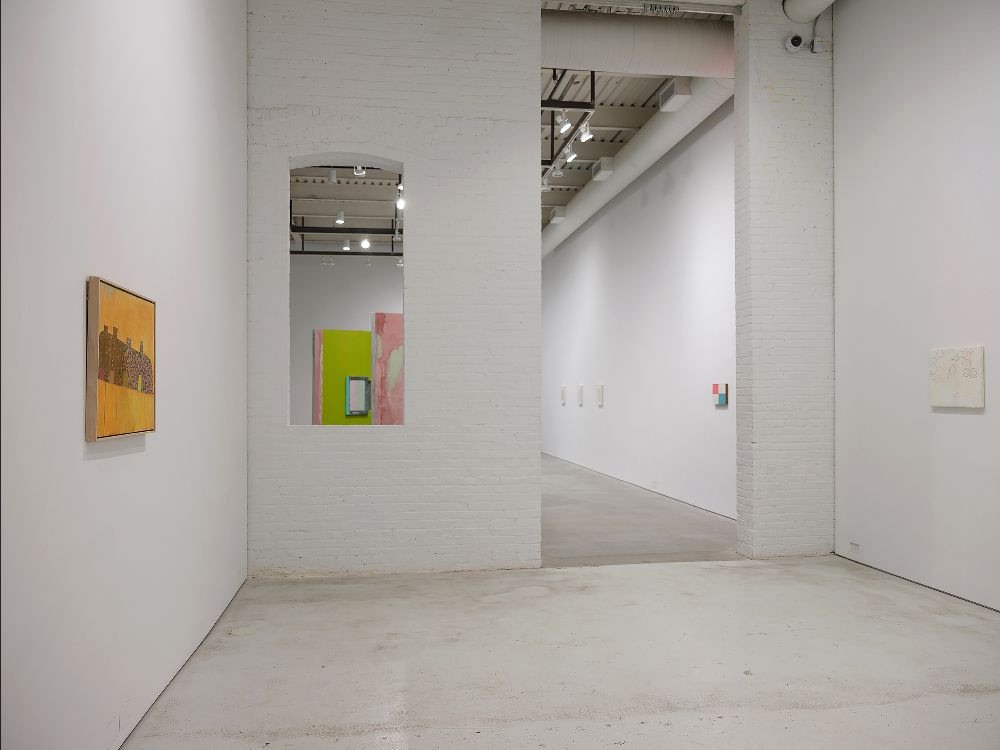
Installation View of Like Cotyledons Buckled with Loam